Contact
 Gallery
 Call
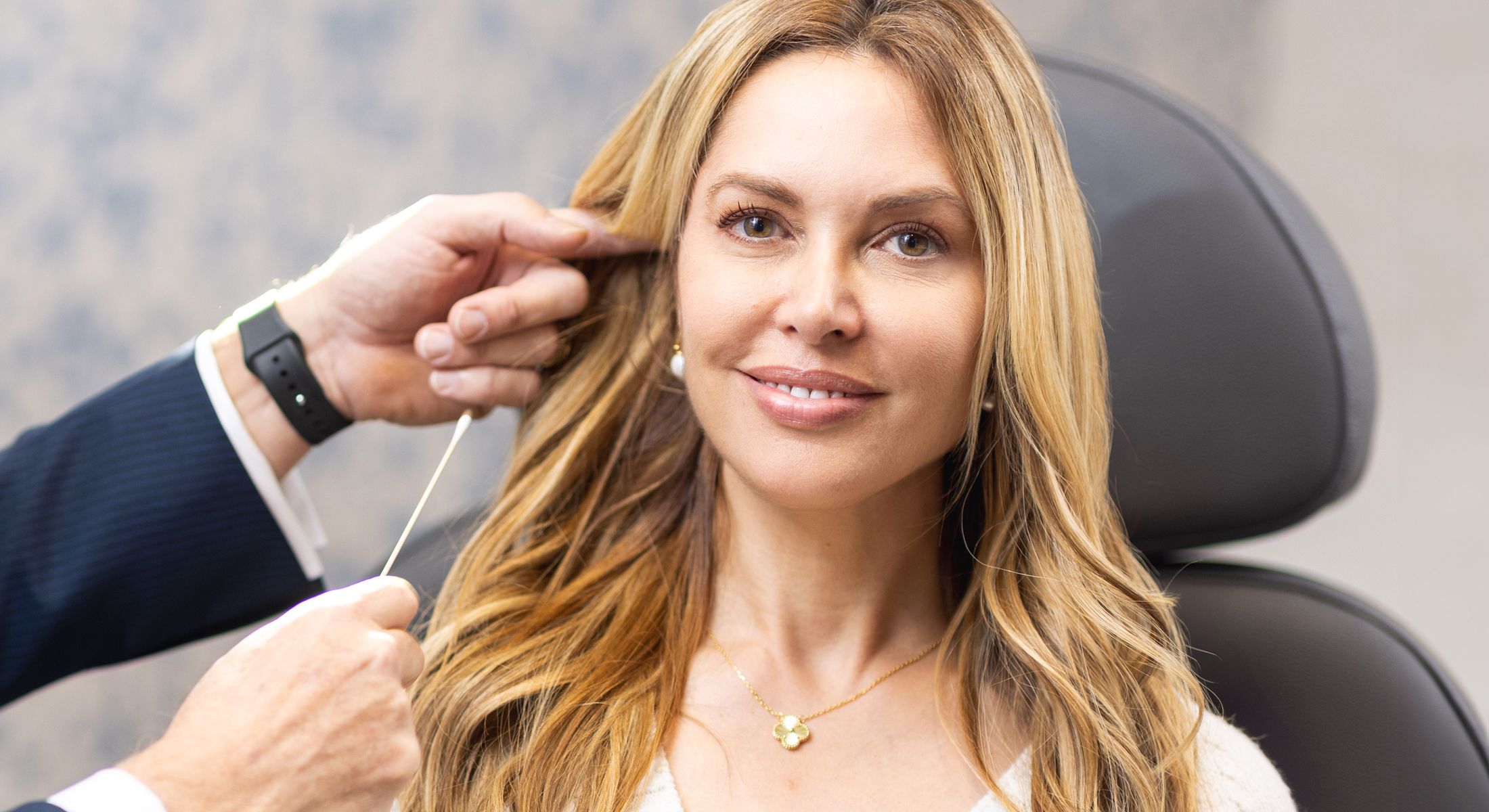
Every facelift leaves scars. A well-planned one hides them in places people rarely look: along the natural curve in front of the ear, around the earlobe, in the crease behind the ear and inside the hairline. Early on they look pink and feel firm. Over the following months most of them flatten and fade until you have to know where to look.
That is the short answer. The longer one depends on which facelift you have, how your skin heals, and how you treat the incisions while they mature.
A facelift lifts the deeper support layer of the face, then removes the extra skin and lets what remains drape over the new position. The surgeon needs access to do that, and the access points follow the ear and the hairline because those borders already break up the skin visually.
A typical full facelift incision has four parts:
When the neck needs work, many patients also get a short incision in the crease under the chin, which gives the surgeon access to tighten the neck muscles. That scar sits under the jaw where you rarely see it in a mirror.
A mini facelift usually uses a shorter incision, often limited to the area around the front of the ear, because it treats less of the neck. Shorter incision, less lift. The right choice depends on how much laxity you have, not on scar length alone.
Most patients follow a similar arc. Your surgeon's own instructions come first, and individual healing varies.
First two weeks. Stitches or staples are in place and then removed. The incision lines look red and may be crusted. Swelling and bruising around them peak in the first few days. Many women can cover the area in front of the ear with hair if they wear it down.
One to three months. The scars look pink or slightly raised and may feel firm or itchy. This is normal remodeling, not a problem. Makeup can usually go over closed, healed incisions once your surgeon clears it.
Three to twelve months. Color fades from pink toward the shade of your skin, and the line softens and flattens. Scars keep maturing through the first year, so judge your final scar at the one-year mark, not at six weeks.
For a broader look at those weeks, see our facelift recovery timeline.
Several things push a scar toward faint or toward noticeable.
Tension. A scar under pull tends to widen. Good technique places the lifting force on the deeper layer, so the skin closes without strain. When a surgeon lifts mainly by pulling skin, scars stretch and the earlobe can get pulled down.
Your skin and healing history. Some people form thick or raised scars. If you have a history of keloids or scars that stayed thick for a long time, tell your surgeon at consultation.
Smoking and nicotine. Nicotine narrows small blood vessels and slows healing at the edges of the incision. Surgeons ask patients to stop well before and after surgery.
Sun. UV light can darken a healing scar. Use sunscreen or a hat on the incisions for the first year.
Hairline planning. A careful surgeon designs the temple and back-of-scalp incisions so the hairline and sideburn stay in a natural position after the skin moves.
If a scar stays raised or wide after it matures, there are options. Our scar treatment page covers what the practice offers.
That is a personal call, and it belongs in your consultation. Most patients decide that a fine line hidden by the ear and hair is a fair exchange for a firmer jawline and neck that last for years. If you want to know how long that improvement holds, read how long a facelift lasts.
Look at real results before you decide. The practice keeps more than 3,000 before and after photos, and the facelift images include close views of the ear and hairline once patients have healed.
Dr. Lapuerta is a triple board-certified plastic surgeon and Fellow of the American College of Surgeons with more than 30 years of experience in elective cosmetic surgery. In his view, experience with the specific procedure, in cases and in years, is the strongest predictor of a result you will be happy with, and that includes where the scars end up.
Call (713) 489-0169 or request a consultation online. Consultations are available in English and Spanish.
Dr. Leo Lapuerta is a triple-board-certified plastic surgeon with over three decades of experience and more than 30,000 procedures performed. He is recognized as a pillar of the Houston aesthetic community. Dr. Lapuerta distinguishes his practice through rigorous safety protocols, including the exclusive use of Medical Doctors (MDs) for anesthesia and an accredited onsite surgical facility.
Beyond his technical precision, Dr. Lapuerta is defined by his concierge philosophy. He personally handles all consultations and injectables, and provides every surgical patient with his personal cell phone number for direct access during recovery. He serves patients from Houston, Katy, and Pearland, and is fluent in both English and Spanish.