Contact
 Gallery
 Call
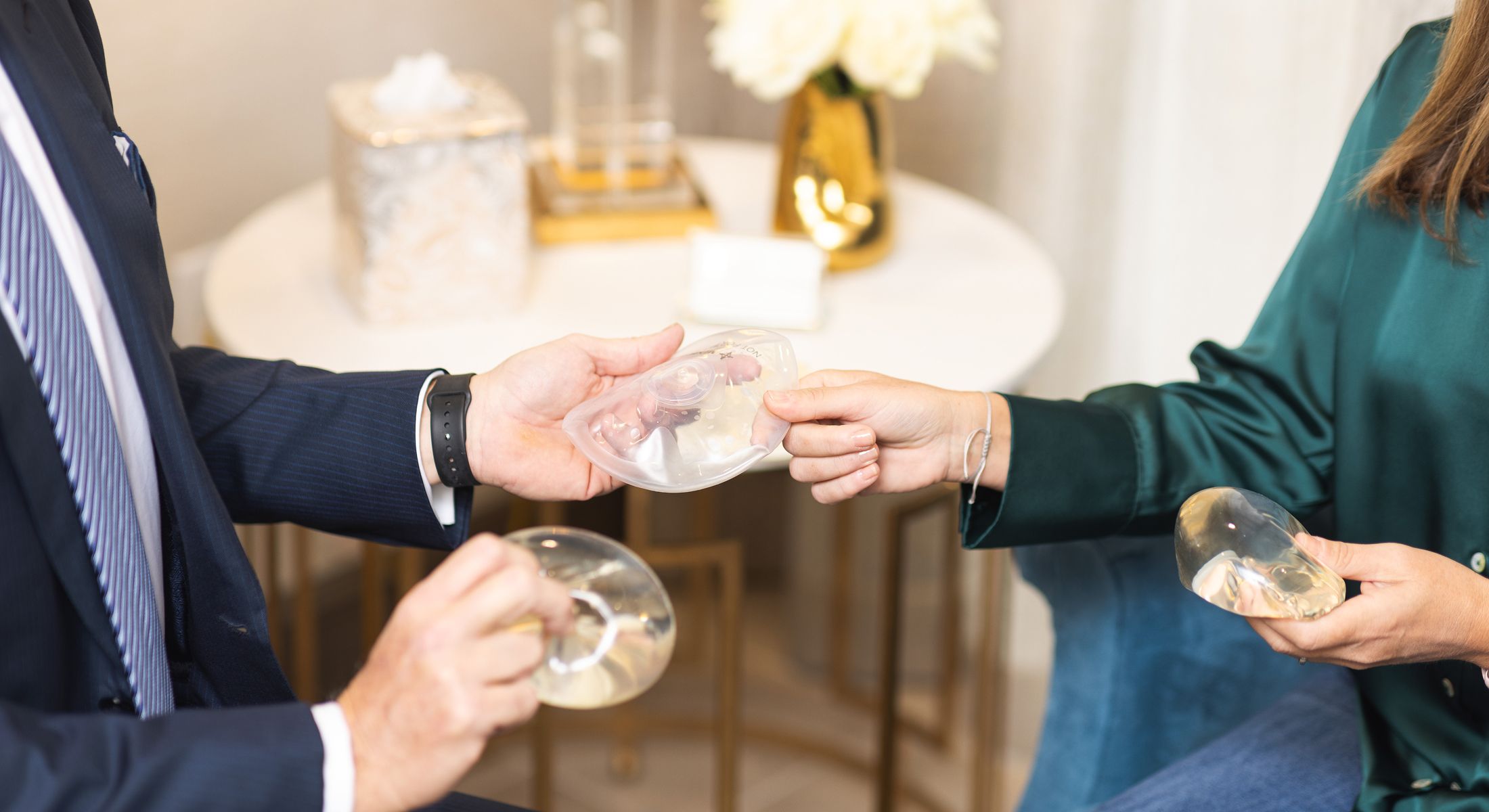
The choice between over and under the muscle comes down mostly to how much natural breast tissue you have to cover the implant. Under the muscle placement adds a layer of padding, which helps thinner patients get a softer, more natural upper edge. Over the muscle placement can suit patients with enough of their own tissue, and recovery is often a little easier. Neither is better for everyone.
For breast augmentation, Dr. Lapuerta considers your desired implant size, the amount of natural breast tissue, your weight and your chest muscle anatomy before recommending a placement.
The pectoralis major is the fan-shaped chest muscle that sits behind the breast. Implants can go in a few positions relative to it.
When people say "under the muscle," they usually mean partial placement, which is the most common way surgeons use the muscle today.
The main advantage is coverage. The muscle hides the upper edge of the implant, which matters most for slim patients with little breast tissue. That extra layer can make rippling and implant edges less visible and give a more gradual slope from the collarbone.
The tradeoffs:
Placing the implant over the muscle leaves the muscle alone, so recovery is often less sore and the implant does not move when you flex. The shape can look fuller in the upper breast, which some patients want.
The tradeoffs:
These patterns usually guide the decision, but your exam decides.
If your breasts sag, placement is only part of the plan. A lift may be needed so the nipple and breast tissue sit at the right height over the implant. The practice's breast augmentation with lift page covers that combined approach.
Implants in any position can make mammograms harder to read, so always tell the technologist you have implants. Special imaging views help, and placement is one detail your radiologist may want to know.
Placement is also one of several factors surgeons weigh when thinking about long-term issues such as capsular contracture, when scar tissue around the implant tightens and firms the breast. If you have questions about that risk, the practice's capsular contracture treatment page explains the condition and how it is treated.
Dr. Lapuerta is a triple board-certified plastic surgeon with more than 30 years of experience in elective cosmetic surgery. He operates in his own QuadA accredited surgical facility in Pearland with physician anesthesiologists. Looking at results on bodies like yours helps, and you can review more than 3,000 before and after photos. For more on choosing a natural look, read our guide to natural looking breast implants.
Call (713) 489-0169 or request a consultation online. Consultations are available in English and Spanish at our Pearland office, serving Houston, Katy and the greater Houston area.
Dr. Leo Lapuerta is a triple-board-certified plastic surgeon with over three decades of experience and more than 30,000 procedures performed. He is recognized as a pillar of the Houston aesthetic community. Dr. Lapuerta distinguishes his practice through rigorous safety protocols, including the exclusive use of Medical Doctors (MDs) for anesthesia and an accredited onsite surgical facility.
Beyond his technical precision, Dr. Lapuerta is defined by his concierge philosophy. He personally handles all consultations and injectables, and provides every surgical patient with his personal cell phone number for direct access during recovery. He serves patients from Houston, Katy, and Pearland, and is fluent in both English and Spanish.